

Local Services Ads vs Google Ads: The Difference, and Which to Run First

Rob Petruccello
Fresh Bread Digital
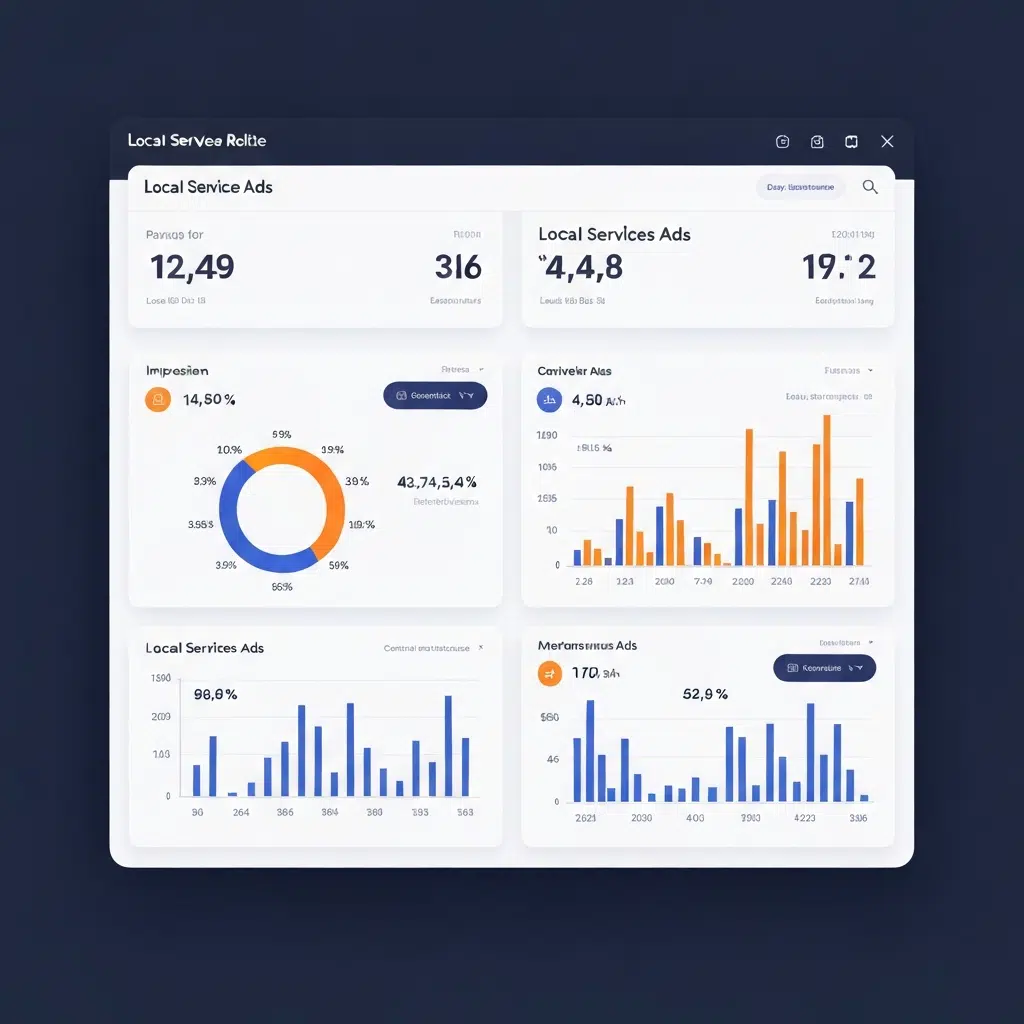
The difference in one line: Local Services Ads charge you per lead and sit above everything else with a Google Verified badge, while Google Ads charge you per click and give you control over the message and the landing page. They are two separate products with separate dashboards, separate billing models, and separate qualification requirements.
| Local Services Ads | Google Ads (PPC) | |
|---|---|---|
| You pay for | A lead – a call or message | A click |
| Position on the page | Very top, above search ads | Below LSAs, above organic |
| What the ad shows | Business name, rating, hours, Google Verified badge | Your headlines, description, and extensions |
| Where the click goes | A call or Google-hosted profile – not your site | Any landing page you choose |
| Targeting | Job type and service area only | Keywords, match types, audiences, schedule, device |
| To get started | Background and license checks, insurance verification | A payment method |
| Bad leads | Can be disputed and credited | You pay for the click regardless |
| Available for | Eligible service categories only | Almost any business |
Note: Google consolidated the Google Guaranteed, Google Screened and License Verified badges into a single Google Verified badge, which switched from a green checkmark to blue in late 2025. The money-back guarantee that accompanied the old Google Guaranteed badge was discontinued at the same time.
If you want pricing specifically, we break it down in how much Google Local Services Ads cost. The rest of this page is about which one deserves your budget first.
If you run a service business in the Texas Hill Country, getting the phone to ring is priority number one. When someone searches “plumber near me” or “roofing repair New Braunfels,” you need to be at the very top of Google. Two paid platforms get you there: traditional Google Ads (pay-per-click) and Google Local Services Ads (LSA). Which one deserves your budget?
The short answer: it depends on your goals, your budget, and how fast you can answer the phone. Buying high-intent traffic is the fastest way to generate leads, but how you buy it matters. Here’s the breakdown, and where to put your money first.
What Are Local Services Ads (LSA)?
Local Services Ads are the listings at the absolute top of a local search, above traditional Google Ads and the Map Pack. They show a green “Google Verified” or “Google Verified” checkmark, your star rating, and a trackable phone number.
The biggest difference is the pricing model: you don’t pay for clicks, you pay per lead. If someone clicks your ad but doesn’t call or message, you pay nothing. If a bot calls, a solicitor tries to sell you something, or a customer is outside your service area, you can dispute the charge in the LSA dashboard and Google typically refunds it.
The Pros of LSAs
- Pay per lead. You only pay for actual calls or messages from potential customers.
- High trust. The Google Verified badge is a massive trust signal; Google backs your work up to $2,000.
- Top placement. You physically cannot get higher on the results page.
The trade-offs: onboarding is rigorous (background checks, license verification, proof of insurance, typically 2–4 weeks), Google decides when to show you, and LSAs are limited by geography and category. You can only get so many leads from them.
What Are Traditional Google Ads (PPC)?
Traditional Google Ads are the text ads that appear just below LSAs, or at the top if no LSAs are running. You bid on specific keywords (“emergency HVAC repair New Braunfels”) and pay every time someone clicks, whether or not they contact you.
That sounds riskier than paying per lead, but Google Ads give you far more control. You write the ad copy, pick the keywords, and choose the exact landing page. You can launch in hours instead of weeks, scale a winning campaign aggressively, and reach search intents LSAs don’t cover.
The Pros of Google Ads
- Total control over keywords, copy, and the landing page experience.
- Scalability. If a campaign works, you can pour fuel on it immediately.
- Broader reach. Specialized or high-ticket services that LSAs miss, plus brand exposure even from people who don’t click.
The trade-off: without active management, Google will happily spend your budget on irrelevant searches. See why service businesses waste money on Google Ads for the mistakes to avoid.
The golden rule of local paid ads: Don’t choose between LSAs and Google Ads. Use LSAs to capture the cheapest, highest-trust leads, and use Google Ads to scale volume and target the high-ticket keywords LSAs miss.
LSA vs. Google Ads: Side by Side
| Feature | Local Services Ads (LSA) | Traditional Google Ads |
|---|---|---|
| Pricing model | Pay per lead (call/message) | Pay per click |
| Placement | Absolute top of the page | Below LSAs, above the Map Pack |
| Control | Low (Google decides when to show you) | High (you control keywords, copy, landing page) |
| Onboarding | Rigorous, 2–4 weeks (background checks) | Fast, can launch in hours |
| Typical cost | $30–$100+ per lead depending on trade | $5–$20 per click; 5–10 clicks per call |
| Best for | High-volume, immediate needs (burst pipes, no AC) | Complex services, aggressive scaling, funnel traffic |
Cost Comparison: Cost Per Click vs. Cost Per Lead
LSAs usually carry a higher upfront cost per lead (a plumbing lead in New Braunfels might run $30–$50; some categories are well over $100), but the conversion rate is extremely high because these are verified, high-intent callers.
Google Ads look cheaper at $5–$20 per click, but it can take 5–10 clicks to produce one phone call. If your landing page isn’t built to convert, your true cost per acquisition on Google Ads can end up well above LSAs. Track cost per lead and cost per booked job, not cost per click; our post on calculating PPC ROI walks through the math.
The Verdict: Which Should You Run First?
Our philosophy is don’t guess, test. But as a rule of thumb:
Start with LSAs if you have a strong Google Business Profile with plenty of reviews, you can answer the phone immediately (Google penalizes missed calls on LSAs), and you want the lowest-risk entry. The ROI is usually faster and the badge builds instant trust.
Start with Google Ads if you need leads this week and can’t wait weeks for verification, you offer specialized services LSAs don’t cover, or you want to send traffic to a high-converting lead gen funnel.
Ideally, run both. Once your LSAs are maxed out, launch Google Ads to capture the rest of the market. A dominant local strategy holds the LSA spot, holds a Google Ads spot, and ranks organically in the Map Pack. When a customer sees your business three times before they scroll, you become the undeniable authority, and your competitors get pushed further down the page.
Frequently Asked Questions
What is the difference between Local Services Ads and Google Ads?
Local Services Ads charge per lead, appear above all other ads with a Google Verified badge, and require background and license verification before you can run them. Google Ads charge per click, appear below LSAs, need no vetting, and let you control keywords, ad copy, and the landing page. LSAs buy you trust and simplicity; Google Ads buy you control and reach.
Can I run both at the same time?
Yes, and for most established service businesses that is the right answer. They occupy different slots on the same results page, so running both increases how much of the page you own. Keep the budgets and the reporting separate so you can see the true cost per booked job from each.
Do Local Services Ads affect my Map Pack ranking?
No. LSAs are a paid placement and have no influence on organic local rankings. Improving your position in the Google Map Pack is a separate exercise – see our guide on ranking higher on Google Maps.
How much does a lead cost on Local Services Ads?
It varies widely by industry and location. A plumbing lead in New Braunfels might cost $30–$50, while some professional categories exceed $200. The key is you only pay when a customer actually contacts you.
How long does it take to get Google Verified?
Verification typically takes 2–4 weeks and requires background checks, license verification, and proof of insurance.
Do I need a website for LSAs?
Technically no; LSAs pull from your Google Business Profile. A strong website still helps build the overall trust and authority Google weighs when deciding which LSAs to show.
Can I dispute bad leads on LSAs?
Yes. If a bot calls, or someone wants a service you don’t provide, dispute the charge in the LSA dashboard and Google will typically refund it.
Can I run both at the same time?
Yes, and you should once LSAs are working. Running both increases your total real estate on the results page.
Stop Guessing With Your Ad Budget
Managing Google Ads and LSAs takes constant attention. Set it and forget it, and Google will gladly spend your budget on irrelevant searches or let your LSA ranking slide after a few missed calls.
For the full picture on how these platforms fit together with Meta Ads and ROI tracking, read our Paid Advertising Guide for Service Businesses. And if you’d rather have an ROI-obsessed team manage your spend like it’s their own, get your free growth plan and we’ll show you exactly where to start.
Ready to stop losing jobs to your competitors?
Let's build a custom growth plan for your business. We'll show you exactly how to get 10-20 more jobs every month.
Get My Free Growth Plan →Grow Your Business With Fresh Bread Digital
Ready to turn these insights into real results? Explore the services that make it happen.
More in PPC Advertising
Related Articles


Stop watching competitors win the jobs that should be yours.
Book a free 30-minute strategy call. We'll show you where your next jobs are coming from and what it takes to win them — even if you've been burned by agencies before.
Contact Information
Phone
Hours
Mon–Fri, 8:00 AM – 5:00 PM CST